


Power Probe current adapter tip measures current from 1 mA to 20 A
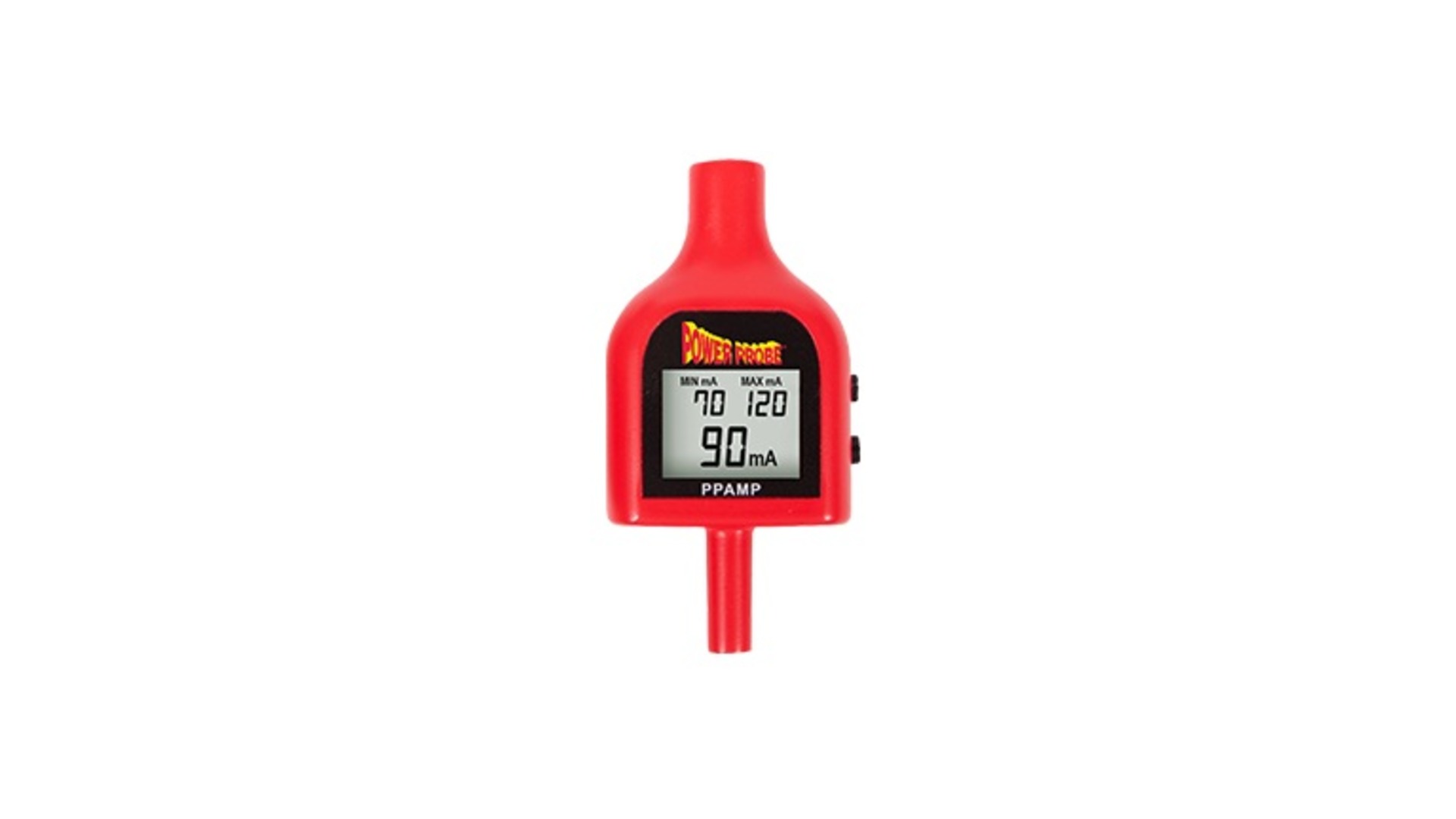
The Power Probe current adapter tip turns a Power Probe into a current meter. The adapter tip measures live current draw from 1 mA to 20 A. The MIN/MAX function captures peak loads. Leakage currents, current draws and electrical faults can be traced quickly.
Key features
 Measures DC current from 1 mA to 20 A
MIN/MAX function captures peak loads
Backlit LCD screen
Memory function
Battery status on the screen
Connects with 4 mm banana plugs
Measuring current with the Power Probe
The current adapter tip connects to Power Probe products with 4 mm banana plugs, such as the Power Probe 3 PowerFlow circuit tester. The adapter tip then works as a measuring instrument for DC current. The measuring range is selected automatically.
One example is fault finding in the fan circuit of a car. The measurement shows which part of the circuit is faulty. That part can then be repaired or replaced. The LCD screen shows the live current together with the minimum and maximum value. The adapter tip switches off automatically after about 10 minutes.
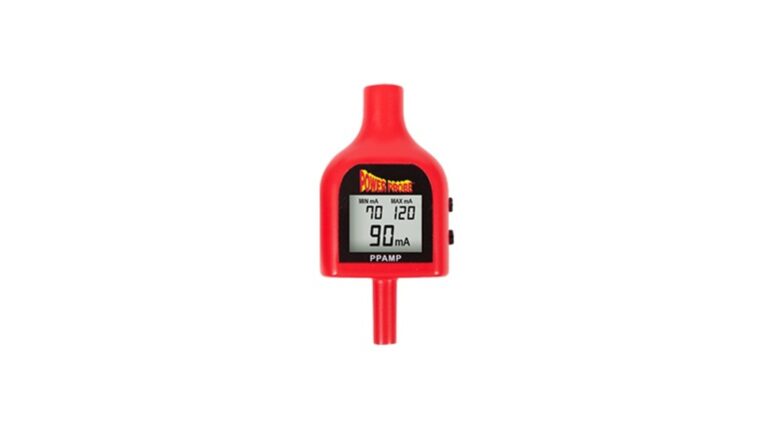
The Power Probe current adapter tip shows the live current with the minimum and maximum value.
The current adapter tip is featured in the Snap-on Hot Tools brochure for October and November 2026 and is available from the Snap-on dealer. For controlling components there is the Power Probe PWM adapter tip. All Power Probe products are listed on the Power Probe overview page.
Technical specifications
- Measuring range: 1 mA to 20 A DC
- Range selection: automatic (not true RMS)
- Maximum display value: 20.0 A
- Display when the range is exceeded: 0L
- Automatic switch-off: after about 10 minutes
- Operating altitude: maximum 2000 m
- Connection: 4 mm banana plugs
- Part number: POWPPAMP
Would you like to find out more following on from this article?
Please get in touch